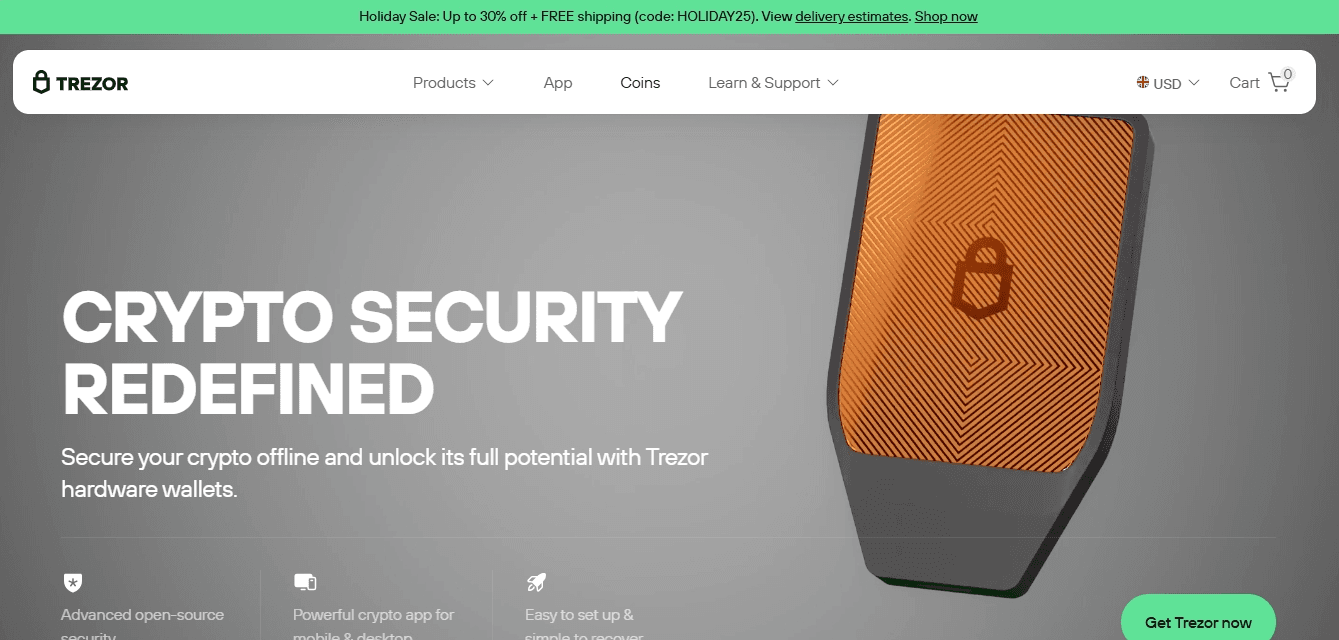
Get Started with Your Trezor Hardware Wallet
Welcome to your Trezor hardware wallet setup guide. A Trezor wallet is a secure device designed to give you full control over your cryptocurrency while keeping your private keys offline. Unlike online wallets or exchange wallets that store your keys on a network-connected device, Trezor keeps them safe from hacks, malware, and phishing attacks.
This guide will walk you step by step through the process of setting up your Trezor device, installing the official Trezor Suite software, securing your recovery seed, and safely managing your crypto. Whether you’re new to cryptocurrency or an experienced user, following these steps carefully ensures the security of your digital assets.
Why a Hardware Wallet Is Essential
Before setting up your Trezor wallet, it’s important to understand why a hardware wallet is critical for crypto security.
Cryptocurrencies are protected by private keys, which act as access codes to your funds. If anyone gains access to your private keys, they can take your cryptocurrency, and there is no way to reverse the transaction.
A Trezor hardware wallet offers several key advantages:
Offline Storage of Private Keys: Your keys never leave the device.
On-Device Verification: All transactions must be confirmed directly on the device.
Protection Against Malware: Even if your computer is compromised, your keys remain secure.
Support for Multiple Cryptocurrencies: One device can manage many coins.
Full Self-Custody: You are in control, with no reliance on third-party services.
By using a Trezor wallet, you minimize the risk of losing funds due to hacks or scams.
Preparing for Setup
Before you begin, gather the necessary materials and prepare a secure environment.
You will need:
Your Trezor device (Trezor One or Trezor Model T)
A computer or smartphone with internet access
A USB cable to connect the device
Pen and paper for your recovery seed
A private and secure space for setup
It’s important to avoid public Wi-Fi, shared computers, or any unsecured networks during setup. Take your time—careful preparation reduces the risk of mistakes.
Step 1: Download Trezor Suite
Trezor Suite is the official software used to manage your wallet and cryptocurrency accounts. It allows you to:
Install apps and firmware updates
Add and manage multiple accounts
Send and receive cryptocurrency
Monitor transactions
Manage your portfolio
To start:
Go to the official Trezor website and download Trezor Suite for your operating system (Windows, macOS, Linux) or mobile device.
Install the software and open it.
Click “Get Started”.
Select “Set up new device”.
⚠️ Always download Trezor Suite from the official website to prevent phishing attacks. Never follow links in emails or social media messages.
Step 2: Connect Your Trezor Device
Once Trezor Suite is installed, connect your device to your computer:
Plug the device in using the USB cable
Turn on the device
Follow the on-screen instructions to navigate through setup
Trezor devices require physical confirmation for all actions, ensuring that no unauthorized transaction can occur without your consent.
Step 3: Initialize Your Device
Trezor will offer two options during initialization:
Create a new wallet
Recover an existing wallet
Choose Create a new wallet if this is your first Trezor. The device will generate a new recovery seed.
Step 4: Set a PIN Code
Your Trezor wallet will prompt you to set a PIN code. This PIN is crucial for protecting your device from unauthorized physical access.
Tips for creating a strong PIN:
Choose a unique combination that is hard to guess
Avoid using repeated or predictable numbers
Never share your PIN with anyone
If the wrong PIN is entered multiple times, Trezor will temporarily block access. The recovery seed can restore the wallet if needed.
Step 5: Backup Your Recovery Seed
Your recovery seed is a list of 12, 18, or 24 words (depending on the model and settings) generated by the device. It is the most important backup of your wallet.
Key points about the recovery seed:
It provides full access to your funds
Trezor does not store your recovery seed
Losing it means losing access to your crypto
Anyone with this seed can access your funds
Write each word carefully in order on the recovery card provided. Accuracy is essential.
Step 6: Secure Your Recovery Seed
Proper storage of your recovery seed is vital.
Best practices include:
Write it down on paper; never store it digitally
Store it in a secure, private location
Keep it away from others and from fire or water damage
Never take photos or screenshots of the seed
Never enter it into any website or app
Trezor will never ask for your recovery seed. Any request is a scam.
Step 7: Confirm Your Recovery Seed
To ensure you have correctly recorded your seed, the device will ask you to confirm it by selecting the words in the correct order. Only proceed once you are confident your seed is accurate and safely stored.
Step 8: Update Firmware
Firmware updates improve device security and functionality.
Trezor Suite will check if your device has the latest firmware
If an update is available, follow the instructions carefully
Do not disconnect your device during the update process
Never trust firmware updates from emails or unofficial sources. Only update via Trezor Suite.
Step 9: Install Cryptocurrency Apps
Trezor devices support multiple cryptocurrencies. Using Trezor Suite, you can install apps for each supported coin.
To install apps:
Open Trezor Suite
Go to the Manager tab
Browse supported cryptocurrencies
Install the apps on your device
Installing or removing apps does not affect your funds. Your assets are tied to your recovery seed, not the apps themselves.
Step 10: Add Accounts
After installing the apps, you can add accounts in Trezor Suite. Each account corresponds to a cryptocurrency and allows you to:
Check balances
Send and receive coins
Track transaction history
Accounts are linked to your Trezor device, ensuring transactions require physical confirmation.
Step 11: Receiving Cryptocurrency
To receive crypto:
Select the account in Trezor Suite
Click Receive
Verify that the address shown in the Suite matches the address displayed on your Trezor device
Confirm the address on your device
Share the address with the sender
Always confirm addresses on the device to prevent malware from altering them.
Step 12: Sending Cryptocurrency
To send crypto safely:
Enter the recipient’s address and amount in Trezor Suite
Review transaction details carefully
Confirm the transaction on your Trezor device
Double-check the address and amount on the device screen
Approve the transaction
Transactions are only signed if you approve them on the device, which protects against unauthorized transfers.
Step 13: Security Best Practices
Using a hardware wallet requires careful habits:
Store your recovery seed securely
Protect your device and PIN
Verify all transactions on the device screen
Avoid phishing emails, messages, and fake websites
Never enter your recovery seed on a computer or online
Good habits now will prevent future losses.
Step 14: Handling Loss or Damage
If your Trezor device is lost, stolen, or damaged:
Your funds are safe if your recovery seed is secure
You can restore your wallet on a new device using your seed
Never type your recovery seed into a computer or online service
Your recovery seed is the only way to regain access to your crypto if your device is lost.
Step 15: Advanced Features
Trezor offers advanced features for users who want more functionality:
Multi-signature wallets for enhanced security
Integration with decentralized apps (dApps)
Staking certain cryptocurrencies directly from the device
Portfolio tracking and analytics in Trezor Suite
Advanced features require careful understanding of blockchain principles and security practices.
Step 16: Avoiding Scams
Be aware of common crypto scams:
Emails claiming urgent action is required
Requests for your recovery seed or PIN
Fake websites imitating Trezor
Social media impersonators
Promises of free cryptocurrency
Trezor will never ask for your recovery seed or PIN. Always verify information from official sources.
Step 17: Staying Informed
The crypto landscape is constantly evolving. Stay informed by:
Following official Trezor updates
Learning about blockchain and wallet security
Reviewing best practices regularly
Testing small transactions before sending large amounts
Knowledge is the best defense against potential threats.
Step 18: Using Your Trezor With Confidence
Once setup is complete, you can use your Trezor wallet to:
Explore supported cryptocurrencies
Send and receive crypto safely
Track accounts and portfolio performance in Trezor Suite
Use advanced features like staking or multi-signature accounts
With proper setup and careful security practices, your Trezor device provides one of the safest ways to manage cryptocurrency.
Step 19: Learning More
Trezor provides resources to help you get the most out of your wallet:
Tutorials for beginners and advanced users
Guides for supported cryptocurrencies
Recovery guides and troubleshooting tips
Security best practices
Regular learning ensures you can manage your crypto confidently and safely.
Conclusion
Setting up a Trezor hardware wallet is the first step toward taking full control of your cryptocurrency. By following these steps carefully—from downloading Trezor Suite to securing your recovery seed—you can protect your digital assets from theft, hacks, and scams.
Security is ongoing: regularly update your device and software, confirm transactions on the device, and follow safe storage practices. By doing so, you are empowered to manage your crypto safely, securely, and confidently.
Your Trezor wallet is now ready. Welcome to secure self-custody of your digital assets.